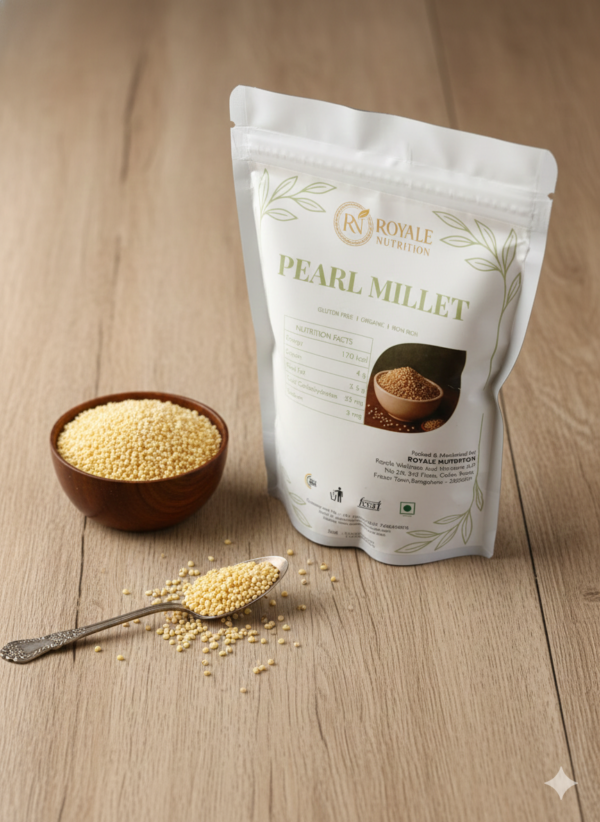
Pearl Millet (Bajra)

350.00

Pearl Millet (Bajra) is one of the oldest cultivated grains in India and a staple in traditional diets for centuries. Known for its exceptional nutritional profile, it is rich in fiber, protein, iron, magnesium, and antioxidants. This ancient grain is widely consumed for its ability to support digestion, regulate blood sugar, strengthen immunity, and promote heart health. Whether you are looking to improve overall nutrition or adopt healthier food choices, it is an excellent daily staple.

At Royale Nutrition, it is carefully sourced from trusted farms and processed naturally to preserve its taste, freshness, and nutritional value.

 Nutrition, Benefits, Uses & Health Advantages

It is one of the oldest cultivated grains in the world and a staple in Indian households, especially in arid and semi-arid regions. Known for its exceptional nutrition and climate resilience, pearl millet bajra has earned recognition as a super grain due to its high fiber, mineral, and plant protein content. It is naturally gluten-free, easy to digest, and suitable for modern health-focused diets.

Traditionally consumed as rotis, bhakris, porridges, and khichdi, pearl millet bajra is now gaining popularity among health enthusiasts, athletes, diabetics, and those seeking sustainable whole foods.

 What Is Pearl Millet (Bajra)?

Pearl millet bajra (Pennisetum glaucum) is a small-seeded cereal grain grown primarily in India, Africa, and parts of Asia. Unlike refined grains, it retains its bran and germ layers, making it a whole grain packed with fiber, antioxidants, vitamins, and minerals.

It thrives in drought conditions and poor soil, making it not only nutritious but also one of the most environmentally sustainable crops. This resilience has made pearl millet bajra a cornerstone of traditional diets for centuries.

Nutritional Profile (Per 100g Approx.)

It stands out among grains for its impressive nutrient density:

  • Calories: ~360 kcal

  • Carbohydrates: ~67 g

  • Protein: ~11–12 g

  • Dietary Fiber: ~8–9 g

  • Fat: ~5 g

  • Iron: ~8 mg

  • Magnesium: ~135 mg

  • Phosphorus: ~285 mg

  • Potassium & Zinc: Present in moderate amounts

Compared to wheat or rice, pearl millet bajra contains higher fiber, iron, and magnesium, making it ideal for balanced nutrition and sustained energy release.
Health Benefits

 1. Supports Heart Health

It is rich in magnesium and fiber, which help regulate blood pressure, improve circulation, and reduce LDL (bad) cholesterol levels. Regular consumption supports cardiovascular wellness and reduces the risk of heart disease.

2. Helps Control Blood Sugar

With its low glycemic index, pearl millet bajra causes a slower rise in blood glucose levels, making it highly beneficial for people with diabetes or insulin resistance. The fiber content also improves insulin sensitivity and promotes stable energy throughout the day.

3. Improves Digestion

Pearl millet bajra is rich in insoluble fiber, which promotes smooth bowel movement, prevents constipation, and supports gut microbiome health. Its alkaline nature makes it gentle on the stomach when properly cooked.

 4. Aids Weight Management

The high fiber and protein content of pearl millet bajra increases satiety, helping reduce cravings and overeating. It supports weight loss goals while ensuring long-lasting energy and nourishment.

 5. Strengthens Bones & Muscles

Pearl millet bajra contains high amounts of phosphorus, magnesium, and calcium, which play a crucial role in maintaining bone density, muscle strength, and nerve function.

6. Rich in Antioxidants

Pearl millet bajra contains polyphenols and flavonoids that help combat oxidative stress and inflammation, supporting long-term immunity and disease prevention.

 Culinary Uses

Pearl millet bajra has a mildly nutty flavor and works beautifully in both traditional and modern recipes:

  • Bajra roti / bhakri

  • Bajra khichdi and porridge

  • Bajra dosa and idli

  • Bajra upma and pulao

  • Gluten-free baked goods

  • Breakfast bowls and energy snacks

Its versatility makes pearl millet bajra easy to incorporate into daily meals while boosting nutritional intake naturally.

How to Cook

  1. Rinse thoroughly before use.

  2. Soak for 6–8 hours to improve digestibility and nutrient absorption.

  3. Cook in a 1:2.5 ratio (millet to water) for soft grains.

  4. Use in rotis, porridges, khichdi, or stir-fries.

Soaking and slow cooking enhance texture and reduce antinutrients, making pearl millet bajra easier to digest.

Summary

Pearl Millet (Bajra) is a powerful whole grain packed with fiber, protein, iron, antioxidants, and essential minerals. It supports digestion, heart health, blood sugar control, bone strength, and sustained energy while being naturally gluten-free and environmentally sustainable. Whether consumed as rotis, porridges, or modern healthy recipes, pearl millet bajra is an excellent addition to any balanced diet.

Key Benefits of Pearl Millet( bajra):

  • High in Fiber
  • Excellent Source of Iron
  • Rich in Magnesium
  • Naturally Gluten-Free
Category:

Reviews

There are no reviews yet.

Be the first to review “Pearl Millet (Bajra)”

Your email address will not be published. Required fields are marked *

❤︎ Save More, Live Healthier — Shop Detox Essentials Now | ⭐⭐⭐⭐⭐ 4.8 out of 5 | 🌿 100% Natural | Organic | Gluten-Free